Meta Campaign Objectives (ODAX): Choose Right
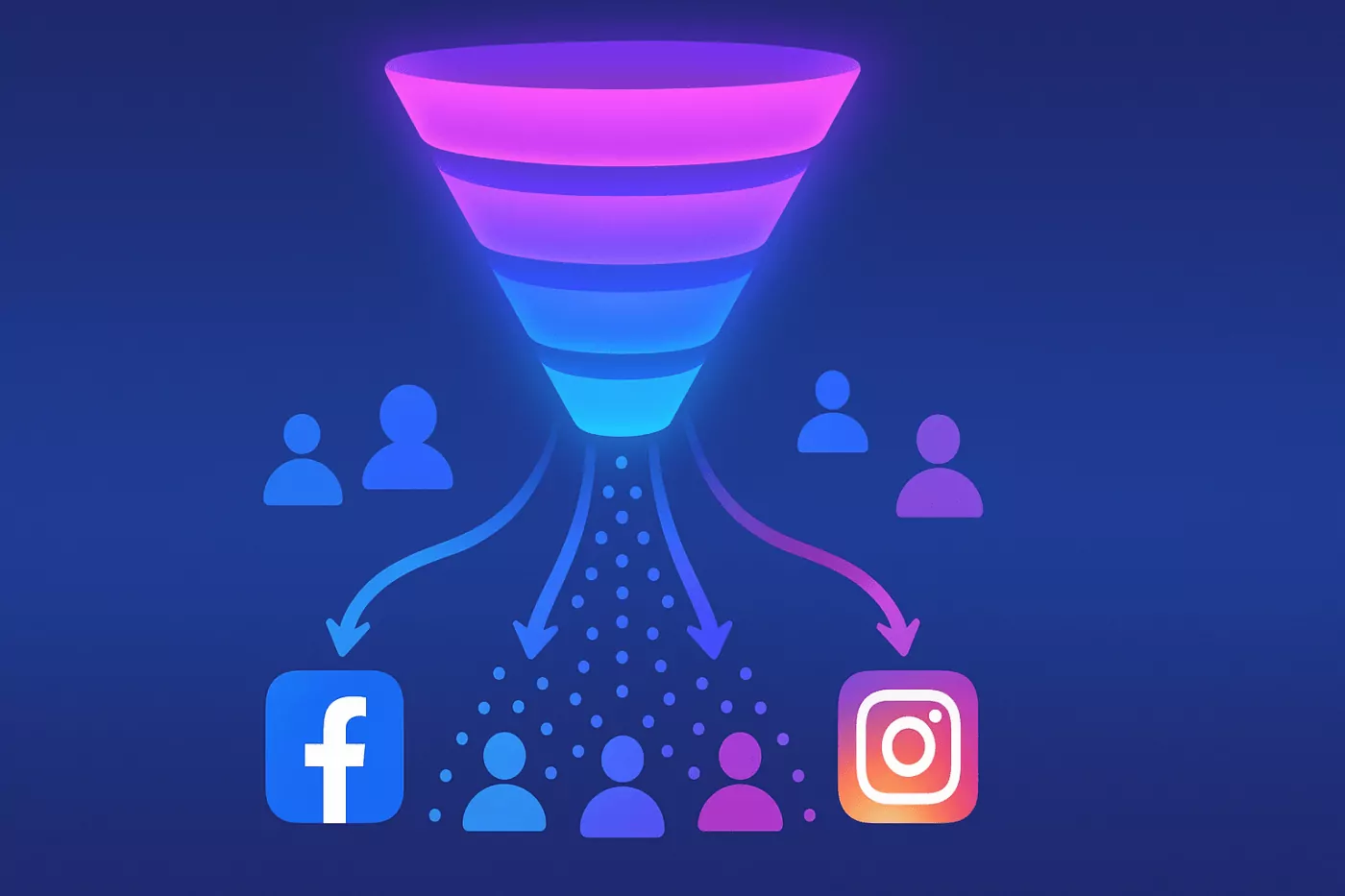
The campaign objective is the single most consequential choice you make in Meta Ads Manager, and most advertisers get it wrong on autopilot. It is not a label. It is the instruction that tells Meta’s delivery system which humans to find. Pick Traffic and the algorithm hunts for people who click. Pick Sales and it hunts for people who buy. Those are rarely the same people. Since 2022, Meta consolidated eleven legacy objectives into six under a framework called ODAX, Outcome-Driven Ad Experiences, fully rolled out across Facebook, Instagram and Threads. This guide breaks down all six, maps them to the funnel, and exposes the costly traps.
What ODAX actually changed
ODAX did not just rename buttons. It re-grouped intent. The old system had eleven objectives spread across three columns (Awareness, Consideration, Conversion) and forced beginners to guess. ODAX collapses that into six outcomes, each tied to an optimization event you select deeper in the setup. According to Meta’s own Business Help Center, the six are Awareness, Traffic, Engagement, Leads, App Promotion and Sales. The naming sounds simpler, but the trap is also simpler to fall into: the friendly word on the button hides a machine-learning target underneath. Jon Loomer, who has documented every Meta interface shift for over a decade, calls ODAX a simplification of the surface that raised the stakes of the choice beneath it.
Here is the mental model that fixes everything: an objective is a promise about who Meta optimizes delivery toward. The platform runs an auction billions of times a day, and inside each auction it estimates how likely a given user is to perform the action you optimized for. That estimate, the action rate, is multiplied by your bid to decide who sees your ad. So when you select Engagement, Meta’s models surface people statistically likely to like, comment or share, because that is the signal you rewarded. The algorithm is not lazy or hostile. It is obedient. It does exactly what you asked, which is precisely the problem when what you asked for is not what you actually want.
The six objectives, one by one
1. Awareness: be remembered, not clicked
Awareness optimizes for cheap, broad reach and ad recall. Meta does not try to make anyone click. It tries to show your ad to the maximum number of relevant people, or to the people most likely to remember it two days later. The headline metric is estimated ad recall lift, the number of people likely to remember your ad. This is genuinely useful, but only for the right buyer. A regional brewery launching a new IPA before festival season, a furniture retailer opening a third showroom, an insurer rebranding: these are awareness plays where the goal is mental availability, not a same-day cart. If you have no budget for sustained presence, Awareness will feel like burning money, because it is a long game.
The data backs the nuance. Brainlabs analyzed 46 Meta brand lift studies covering 225 campaigns and found the largest brand-awareness shifts came from high-fidelity brand and product creatives delivered to net-new reach audiences, with lifts around 8% and 7.5% versus no detectable lift for weaker creative. Frequency matters too: that analysis pointed to roughly two exposures per week as optimal, while Kantar’s separate Meta studies landed on about three per week for brand recall. Translation: Awareness is not a dumping ground for leftover budget. It works when the creative is strong, the audience is fresh, and you control frequency. A fintech app running a category-creation campaign, where nobody is searching for a product they do not know exists yet, is a textbook fit.
2. Traffic: clicks, and only clicks
Traffic optimizes for link clicks or landing-page views. That is its entire job. It finds the people in your audience most likely to tap and arrive on a page. Sounds reasonable, until you realize a click is not a customer. Meta’s system, asked for clicks, will gladly find serial clickers: curious scrollers, deal-hunters, people who bounce in two seconds. They satisfy the objective perfectly and buy nothing. Traffic has legitimate uses, content marketing to a blog, driving readers to a long-form guide, warming an audience you will later retarget, but using it to sell products is the most expensive mistake in this whole guide. We will quantify it in a moment, and the number is brutal.
3. Engagement: social proof, messages, video views
Engagement is the most misunderstood objective because it bundles several very different sub-goals: post likes and comments, page followers, event responses, video views, and messaging conversations. Each optimizes for a distinct event. Choosing Engagement to chase comments will get you comments, often from people who love arguing in comment sections and will never open their wallet. But the messaging variant is a quiet workhorse. A bespoke kitchen installer, a driving school, a B2B consultancy with a high-touch sales cycle, these benefit from Engagement optimized for conversations, because a started chat is a real intent signal. The skill is matching the sub-event to the business outcome, not picking Engagement because your reach felt low.
One worked example clarifies the Engagement trap. A mid-size gym chain wanted memberships and chose Engagement because a consultant promised cheap reach. The campaign racked up thousands of comments and reactions on a motivational video, the engagement rate looked spectacular, and almost nobody signed up. The audience Meta found was people who enjoy tapping a heart on fitness content, not people ready to commit to a contract. When the same budget moved to a Leads objective with a short qualifying form, cost per actual trial booking dropped sharply even though the headline engagement numbers collapsed. The vanity metric and the business metric pointed in opposite directions, which is the whole lesson.
4. Leads: fill the pipeline
Leads optimizes for form completions, either Meta’s native Instant Forms inside the app or conversions on your own site. It is built for businesses that sell after a conversation: insurers, real-estate agents, SaaS demos, home-services quotes, education enrollments. The trade-off is quality versus volume. Native Instant Forms are frictionless, so they produce cheap leads, but often low-intent ones because filling a pre-populated form costs the user almost nothing. Benchmark data shows the spread plainly: real estate sits among the lower costs per lead, around the mid-teens to low-double-digits depending on market tier, while automotive has climbed sharply, with Cox Automotive reporting an average around 326 dollars per lead in its 2026 Dealer Digital Marketing Report, and EV leads near 412 dollars. Same objective, wildly different economics by vertical.
The fix for cheap-but-weak leads is to add friction on purpose. Meta lets you switch Instant Forms from the default volume mode to a higher-intent mode that adds a review step, and you can append qualifying questions. A B2B software vendor selling a five-figure annual contract should never run a frictionless form: it will drown the sales team in tire-kickers. A solar installer, by contrast, may want volume and let the call center qualify. Leads is also where the optimization-event lesson bites hardest. Optimizing for a form fill is not optimizing for a closed deal. If your CRM data feeds back which leads became customers, you can use the Conversions API to optimize on a deeper event, and the lead quality improves because Meta learns from real outcomes.
5. App Promotion: installs and in-app events
App Promotion is the specialist objective, and if you do not have a mobile app you can ignore it entirely. It drives installs or optimizes for in-app actions like a registration, a first purchase, or a subscription. It requires the Meta SDK or a mobile measurement partner like AppsFlyer or Adjust wired into your app, because Meta needs to receive those in-app events to learn. The strategic decision here mirrors the rest of the framework: optimizing for installs gets you installs, many of which never open the app again. Mature app marketers optimize for value events, a completed onboarding or a paid conversion, accepting a higher cost per install in exchange for users who actually matter. It is the same who-do-you-want-Meta-to-find logic, in a mobile shell.
6. Sales: the revenue engine
Sales optimizes for purchases and conversion value. This is the objective e-commerce and direct-response businesses should default to, and it is the home of Advantage+ Shopping campaigns (now folded into Advantage+ Sales). It requires conversion tracking, the Meta Pixel plus ideally the Conversions API, so the algorithm can learn from real purchase events. Feed it purchase data and it will relentlessly find buyers, optimize toward higher-value carts if you pass value, and power catalog and dynamic retargeting. The catch is that it needs signal: a brand-new pixel with zero purchase history will struggle in the learning phase. You usually need a baseline of conversion events per week before delivery stabilizes, which is why tiny stores sometimes start with a broader event before graduating to purchases.
Mapping objectives to the funnel: TOFU, MOFU, BOFU
The funnel is the clearest way to choose. Top of funnel (TOFU) is cold audiences who do not know you: this is where Awareness, and sometimes Traffic or video Engagement, earn their place. The job is reach and a first impression, not revenue. Middle of funnel (MOFU) is people who have shown a flicker of interest: Engagement for conversations, Leads for capturing contact details, Traffic to a deep educational asset. The intent is warmer but not ready to buy. Bottom of funnel (BOFU) is people on the edge of purchase, retargeting site visitors, cart abandoners, your customer list lookalikes: this is Sales territory, full stop. App Promotion runs its own parallel funnel from install to in-app value.
The common beginner error is running the entire funnel on a single objective. A boutique skincare brand that only ever runs Sales to cold audiences will plateau, because it never builds the warm pool that Sales converts so efficiently. Conversely, an agency that runs everything on Traffic, top to bottom, will report glowing click numbers to a client whose revenue never moves. The mature structure stacks objectives: an Awareness or video layer feeds a retargeting Sales layer, with the proportions shifting as the account matures. There is no universal split, but the principle is fixed: the objective must match the temperature of the audience and the action you actually want from them.
The optimization event decides everything
Underneath the friendly objective name sits the real lever: the optimization event. This is the specific action Meta tries to maximize, and it overrides intuition. Two advertisers can both pick Sales, but if one optimizes for Add to Cart and the other for Purchase, they will reach different people and report different ROAS. Meta builds an audience profile from whoever performs your chosen event, then finds more of them. Optimize for a shallow event, page views, add-to-carts, form opens, and you teach the model to find shallow actors. Optimize for the deepest reliable event you have enough volume on, and the model finds your real buyers. This is the mechanism behind every objective in this guide, and ignoring it is why so many campaigns look busy and earn nothing.
Volume is the constraint that forces compromise. Meta’s delivery system needs enough events to exit the learning phase and predict reliably; the long-standing guidance is roughly 50 optimization events per ad set per week. A store doing 30 purchases a week cannot stabilize a Purchase-optimized ad set, so it has three honest options: optimize for a more frequent upstream event temporarily, consolidate ad sets so events pool together, or feed cleaner signal via the Conversions API so fewer events are lost. The wrong move is to keep optimizing for a rare event and let the ad set thrash in perpetual learning. Choosing the optimization event is therefore a negotiation between depth, the event closest to revenue, and volume, the event you have enough of.
A practical heuristic helps here: pick the deepest event that still clears the volume bar, then move deeper as data accumulates. A new direct-to-consumer coffee brand might launch optimizing for Add to Cart while purchase volume is thin, then graduate to Purchase once weekly sales pass the threshold, then add value optimization to chase higher-margin orders. Each step trades a little reach for a lot of relevance. The Conversions API matters at every stage because browser tracking loss since iOS privacy changes means a Pixel-only setup can silently drop a large share of events, starving the very signal the objective depends on. Better signal does not just improve reporting; it directly improves who Meta finds.
The Traffic trap: clicks are not customers
Now the number that should change how you set up your next campaign. Focus Digital’s 2025 Facebook Ads ROAS report, built on data from Varos, Triple Whale, Vaizle and its own managed campaigns covering thousands of advertisers, found median ROAS of 4.87 for Sales campaigns versus just 0.52 for Traffic campaigns. That is the widely-cited 835% gap. Read it carefully: Traffic returned barely half of every euro spent, while Sales returned almost five times the spend. Same products, same audiences possible, only the objective changed. This is not a Meta-published figure; it is agency benchmark data, and you should treat it as directional rather than a guarantee. But the direction is unmistakable and it matches the mechanics: optimize for clicks, get clickers; optimize for purchases, get buyers.
Why does Traffic feel tempting? Because the dashboard lights up. Clicks are cheap, the cost per click looks great, and a junior media buyer can show a client a falling CPC and feel productive. But CPC is a vanity metric when revenue is the goal. The Focus Digital data also showed Engagement campaigns at 0.70 median ROAS, barely better than Traffic, confirming that shallow objectives underperform on revenue across the board. The honest reading is not that Traffic is useless; it is that Traffic is a top-of-funnel and content tool, never a sales tool. If your goal is purchases and you are running Traffic to a product page, you are paying Meta to find the people least likely to ever buy from you.
Two myths to bury
Myth 1: boosting a post is the same as advertising
The blue Boost button is the most expensive convenience on Facebook. According to Meta’s own Business Help Center, a boosted post is a stripped-down ad with a single implicit objective, usually Engagement or page-level interaction, and far fewer controls. You cannot choose Sales optimization, you cannot build custom or lookalike audiences from your pixel, placements are limited largely to feeds, and conversion tracking is thin. You are handing Meta the worst objective for revenue and removing the tools that make the platform work. A bakery boosting a photo of a new cake will get likes from people who love cake photos and live nowhere near the shop. The same budget in Ads Manager, on a Sales or Leads objective with a proper audience, would actually move the business. Boosting is not advertising; it is paying for applause.
Myth 2: optimizing for engagement or traffic fills the cart
This is the same error wearing a smarter suit, and it traps experienced marketers too. The reasoning sounds logical: more engagement means more people see my brand, more traffic means more visitors, and surely some fraction converts. But Meta does not optimize toward your eventual goal; it optimizes toward the event you selected, and it gets ruthlessly good at it. Ask for engagement and you get professional engagers. Ask for traffic and you get professional clickers. The fraction that converts is so small that the cost per actual sale dwarfs what a Sales objective would deliver, exactly what the 4.87 versus 0.52 ROAS gap demonstrates. If you want carts filled, you must optimize for the purchase event itself and give Meta the conversion signal to learn from. Anything upstream is a proxy, and the algorithm will exploit the gap between the proxy and the goal every single time.
What the case studies actually show
Concrete numbers anchor the theory. A home-improvement retailer documented by agency UM moved from a 1.18 ROAS to 6.47 within 120 days, generating over 700,000 dollars in revenue, by shifting from a lead-gen mindset to a properly tracked Sales objective. On the AI-campaign side, Meta states that Advantage+ Shopping campaigns deliver a 17% lower cost per purchase than manual business-as-usual campaigns and a 32% lower cost per incremental conversion when run alongside manual. Independent agency tests echo the direction: Top Growth Marketing reported 3.14 ROAS for Advantage+ Shopping versus 2.70 for manual during Black Friday 2024, a roughly 16% lift. These are Sales-objective wins, and none of them came from optimizing for clicks.
But case studies also demand skepticism, which is the expert’s real edge. Wicked Reports analyzed 55,661 Meta campaigns in June 2025 and found Advantage+ new-customer acquisition cost more than doubled, from about 257 dollars in May 2024 to 528 dollars in May 2025, because the system tends to steer budget toward existing customers who convert easily, inflating headline ROAS while quietly starving new-customer growth. Lesson: even the right objective can report a flattering number that hides a strategic problem. A high Sales ROAS built mostly on retargeting your own buyers is not the same as profitable growth. The objective sets the optimization target; you still have to read the report critically and check whether the revenue is incremental or just recycled.
Beginner errors that quietly drain budget
Five mistakes show up again and again. First, defaulting to Traffic because it is cheap and the CPC looks good, the single costliest habit, as the 835% gap proves. Second, changing the objective on a live campaign and expecting continuity: switching objectives resets the learning phase, so the algorithm starts over and performance dips before it recovers. Third, optimizing for a rare event with too little volume, leaving the ad set stuck in perpetual learning and never stabilizing. Fourth, choosing Sales with no conversion tracking installed, which leaves Meta blind and unable to learn from purchases. Fifth, judging an awareness or engagement campaign by ROAS, a metric it was never built to produce, and killing a working top-of-funnel effort for the wrong reason.
The meta-error behind all five is treating the objective as a formality instead of a strategic commitment. Before you touch Ads Manager, answer one question: what single action, performed by a stranger, would I pay for right now? If the answer is a purchase, you run Sales with purchase tracking. If it is a qualified contact, you run Leads with the right form mode. If it is mental availability for a launch nobody is searching for yet, you run Awareness and judge it on recall, not revenue. The objective is downstream of that answer, never the starting point. Get the question right and the six ODAX objectives stop being a confusing menu and become a precise toolkit. Get it wrong and no amount of creative or budget will save the campaign.
Sources
Meta Business Help Center, the difference between boosted posts and Meta ads, facebook.com/business/help/317083072148603. Meta Business Help Center, find out how your brand awareness campaign performed. Jon Loomer Digital, ODAX: Facebook Simplifies Campaign Objectives, jonloomer.com. Focus Digital, Facebook Ads Average ROAS 2025 Report (Sales 4.87 vs Traffic 0.52 median ROAS, 835% gap; sources Varos, Triple Whale, Vaizle), focus-digital.co. Brainlabs, 46 Meta Brand Lift Studies analysis (225 campaigns), brainlabsdigital.com. Kantar, Optimizing brand-building on Meta. UM, home-improvement retailer Meta Ads case study (ROAS 1.18 to 6.47), um.marketing. Top Growth Marketing, Advantage+ Shopping Black Friday 2024 test. Wicked Reports, June 2025 analysis of 55,661 Meta campaigns. Cox Automotive, 2026 Dealer Digital Marketing Report (CPL data). Meta official claims on Advantage+ Shopping cost efficiency.